Tech Journal Automation: The Invisible Reason Behind Workplace Satisfaction
In the era of the Great Resignation, organizations must offer better employee experiences to incentivize teammates and retain talent. While pay and benefits create allure, there’s another solution offering longer-term wins for both employees and the business.
By Amanda Best / 15 Nov 2022 / Topics: Artificial Intelligence (AI) , Featured , Customer experience , Analytics
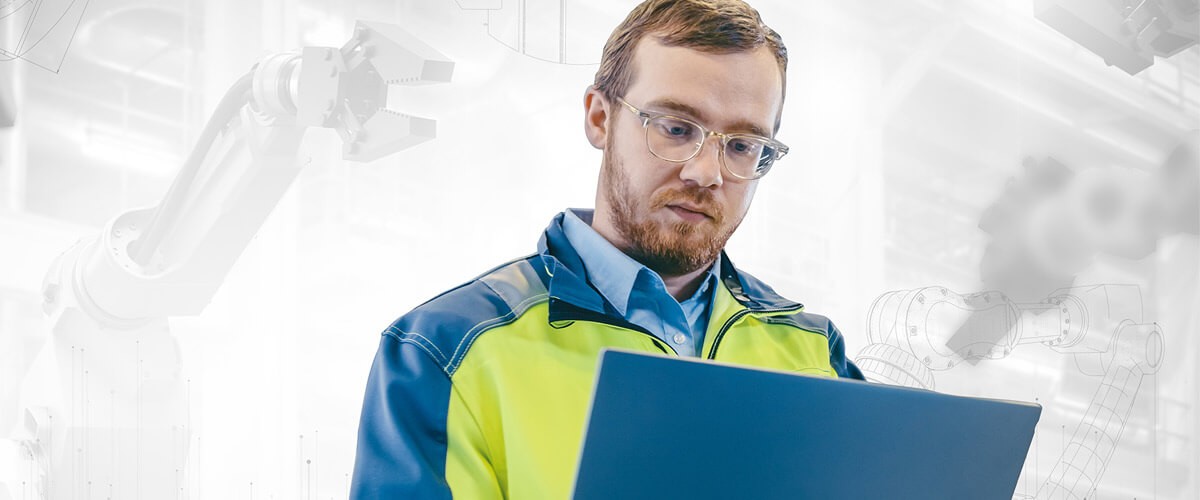
A 2021 Salesforce survey found 89% of full-time workers are more satisfied with their job and 84% are more satisfied with the company they work for, all thanks to the use of automation. What’s more, 91% say automation saves them time and supports better work-life balance.
But how?
How (and where) workforce automation is used today
Automation is helping organizations across industries retain workers by automating tedious, repetitive or even dangerous tasks. The industries most reliant on automaton currently are automotive manufacturers, along with avionics, consumer goods, food and beverage, and medical instrument manufacturing. But these aren’t the only industries where automation can make a transformative impact on the employee experience.
Setting the table for restaurant automation
In September 2021, the hospitality quit rate was twice the national average, reaching a historic high of 6.4%. And, as recently as August 2022, the hospitality quit rate still lingered around 6%.
According to QSR Magazine, restaurant workers are looking for:
- Better pay and benefits
- Flexibility and work-life balance
- Upward mobility within the industry
But how can automation help restaurants realize these outcomes?
Some restaurants have leveraged robotics, with machines taking care of some repetitive prep tasks. And ordering kiosks — a staple of the fast-food category — are increasingly present in dine-in restaurants. By putting customers in control of ordering, these solutions reduce errors and save money on wasted ingredients — and, by offloading tasks from employees, they boost worker satisfaction.
By putting customers in control of ordering, these solutions reduce errors and save money on wasted ingredients — and, by offloading tasks from employees, they boost worker satisfaction.
Relieving the mental taxation and physical strain of repetitive restaurant tasks with robotic innovations and self-service solutions improves morale and gives staff the opportunity to focus on more important, fulfilling tasks, leading to chances for upward mobility and better pay. And, these innovations lead to happier customers — who leave better tips and visit more frequently.
According to Square Up, automated software for payment processing and back-of-house operations can enhance experiences for diners and employees alike.

The benefits of automation aren’t limited to the dining experience. According to Square Up, automated software for payment processing and back-of-house operations can enhance experiences for diners and employees alike.
Back office automation is especially beneficial when it comes to inventory management. Restaurant managers can receive alerts when ingredients are low in stock and can use data patterns to set up automatic ordering. And, Point of Sale (POS) systems can use the same real-time data to mark menu items temporarily unavailable.
These insights benefit customers as well as employees. For example, a local pizza joint can use intelligent automation to track consumption of toppings across special promotions and days of the week and automatically adjust order volume to ensure proper inventory. That way, there’s plenty of pepperoni to meet demand, and the shop doesn’t over-order less popular toppings (like pineapple). Ultimately, the pizza shop can control budget with optimized inventory forecasting and drive greater customer satisfaction by reliably meeting demand.
Automation and robotics are driving Industry 4.0.
Manufacturers face enormous pressure to increase output without increasing costs. Automated solutions like robotics can help, but the cost of implementing them has presented roadblocks for many manufacturing organizations. Larger manufacturers can invest in expensive equipment that automates each step in a production process, but small-to-medium businesses can’t always justify the upfront expense.
Fortunately, the emerging Robotics as a Service (RaaS) consumption model allows manufacturers to lease out robotics technology. In some cases, maintenance is even included in the leasing fees. As a result, RaaS is rising in popularity, and ABI Research predicts there will be 1.3 million RaaS installations by 2026, generating $34 billion in revenue.
Using robotics equipment reduces waste, increases access to raw materials, enhances workplace safety and reduces human errors that can lead to downtime. RaaS extends these production efficiency and safety benefits to more manufacturers, and it also allows factories to continue production more safely during public health events like the COVID-19 pandemic.
Using robotics equipment reduces waste, increases access to raw materials, enhances workplace safety and reduces human errors that can lead to downtime.
And, when robotics equipment is connected to smart devices that provide real-time data analytics, manufacturers unlock insights that can help them innovate processes and track inventory, enabling greater cost savings and freeing workers to focus on complex, meaningful tasks that provide a likelier growth trajectory. Plus, safer factory floors lead to happier employees.
Retail automation trends benefiting both workers and shoppers
While the COVID-19 pandemic boosted retail business — retail sales grew an estimated 6.7% in 2020, much higher than the five-year average of 4.4% — it also forced retailers to adapt to change and future-proof their businesses with new technology solutions.
As a result, many turned to automation to help scale their businesses and support a wide range of processes, including improving inventory management, optimizing staffing, forecasting sales and delivering a better customer experience.
E-commerce automation has helped retailers adapt to an increase in online sales. Similar to restaurant automation software, retail automation software can streamline inventory management by notifying managers to order items that are running low in stock and disabling online listings for out-of-stock products.
Other retail and marketing automation use cases include:
- Automatically adding tags that signal free shipping or special discounts to loyalty members
- Nudging customers with an email when a product they viewed or previously added to their cart is low in stock
- Flagging potentially risky orders, like when a bot buys all your inventory
- Scheduling price changes and promotions for specific time periods
- Pre-loading new products and publish them simultaneously across all e-commerce channels, including social media
- Automating order tracking emails so the customer is aware of every step of their delivery, proactively answering questions about order status
When these tasks are triggered and executed by software, teammates can focus on tasks with higher-value outcomes, including training, sales and marketing, product improvement and more.
Better workflows make for happier teammates.
Organizations across every industry and size can realize the transformational power of automation. Investing in strategic, employee-centric automation solutions gives you a competitive advantage in the marketplace — but, more importantly than creating a better bottom line, you’ll also create a more rewarding and desirable workplace.



Advertisement

How automation boosts employee satisfaction
Automation produces faster service delivery with fewer errors and increased safety.
↓ Fewer errors means fewer returns and refunds, leading to cost savings.
↓ With easy tasks automated, teammates can focus on higher-value work, creating a sense of purpose and increasing productivity.
↓ When automation is connected to data analytics, you can innovate processes and track inventory more easily, contributing further to workplace safety and cost savings.
↓ With fewer errors and happier customers, team morale rises and customer service soars.
↓ A fulfilling, positive employee experience boosts team performance, sales and customer satisfaction.
↓ In short, automation produces a win-win-win scenario for the company, employee and the customer.



Advertisement

Related articles




Narrow your topic:
Artificial Intelligence (AI) Customer experience Analytics Tech Journal View all focus areas
About Tech Journal
Tech Journal is a free, quarterly digital magazine written by IT pros, for IT pros. It incorporates thought leadership on a range of topics, including supply chain optimization, workplace collaboration, cloud and data center transformation, and digital innovation. Dive into the trends and solutions shaping today’s IT and business landscape and hear best practices firsthand from the experts themselves.
Learn more about how Insight can help you manage today's needs and prepare for the future.