Tech Journal How Human Connection is Driving the Future of Healthcare IT at SCL Health
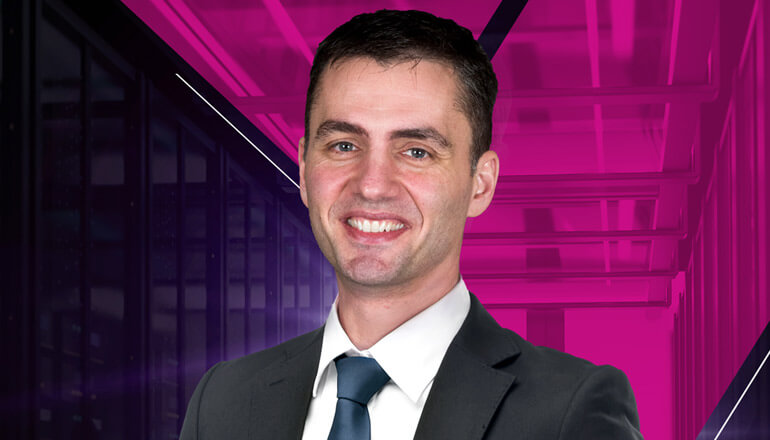
The healthcare technology landscape has never been more challenging — but, according to Craig Richardville, CIO and CDO of SCL Health, a people-first approach knocks down roadblocks and strengthens relationships between patients and caregivers.
By Kellie Herson / 14 Dec 2021 / Topics: Artificial Intelligence (AI) , Featured , Digital transformation


Conversation with
Craig Richardville
CIO and CDO, SCL Health
The COVID-19 pandemic reshaped every industry, but none was more heavily impacted than healthcare. On top of treating the virus, caregivers also had to find ways to mitigate risk during appointments and procedures, manage their own burnout, and support their patients through the emotional, physical and material impacts of the pandemic.
Yet many of these challenges are not specific to the current moment. They reflect long-standing concerns about access, efficacy and equity in the healthcare system — concerns that IT leaders seek to address through smart technology investments.
We sat down with Craig Richardville, chief information officer and chief digital officer at SCL Health, to learn how he’s navigating today’s obstacles and opportunities, the people-first philosophy that guides his work and his predictions for the future of healthcare technology.
Strategic healthcare IT investments drive better outcomes.
Delivering the best patient care possible is the goal of every healthcare organization. But for SCL Health, a nonprofit system of eight hospitals and more than 150 clinics across Colorado, Montana and Kansas, that goal is centered around a mission to serve vulnerable populations.
Achieving that mission requires leveraging technology in a way that removes barriers to care and simplifies the experience for patients and caregivers alike. Richardville notes, “It’s important to make sure that you have a focus and don’t get distracted by chasing a lot of shiny objects. Allow yourself to really focus on doing some things extremely well.”

“ It’s important to make sure that you have a focus and don’t get distracted by chasing a lot of shiny objects. Allow yourself to really focus on doing some things extremely well.
For Richardville and his team, that strategy has led to collaborating with Insight to adopt solutions that integrate data analytics, Artificial Intelligence (AI) and Machine Learning (ML), as well as managing the compliance and cybersecurity concerns those technologies bring. SCL Health has found particular success with audio analysis tools, which bring the intuitive voice technologies that providers and patients regularly use in other settings into a clinical context.
As parts of an integrated whole, these innovations streamline processes — especially repetitive administrative tasks involving paperwork and record-keeping — so that caregivers can accelerate and improve decision-making and spend more time engaging meaningfully with patients.
But improving routine, day-to-day tasks is just the beginning. These technologies also offer predictive capabilities that lay a foundation for SCL Health’s longer-term goal to move from a reparative to a preventative model of care — an ambitious objective in an industry in which structural, cultural, geographic and economic roadblocks present barriers to accessing routine screenings and services.
Advertisement

“Historically, we’ve been very much incentivized by focusing on the care side of healthcare. If you’re broken, we fix you,” Richardville says. “We are shifting to focus on the value side of healthcare. The value side is health. How do I predict? How do I prevent? How do I keep you healthy and out of the healthcare system?”
The real difference-maker? A people-first approach.
Identifying the right technologies to foster a more holistic, accessible healthcare environment requires relentless attention to what matters most: people. “If you look at the people, processes and technology, the focus within our division is people first and foremost — from the patient, who is the center of all our work, to the provider who is providing hands-on care, to all of our caregivers on the front lines,” Richardville explains.
And, within that attention to people’s needs, the patients SCL Health serves are most important: “The first question we ask any time we face a decision is: What’s best for the patient?” says Richardville.
This means that technology investments need to align meaningfully with the services SCL Health provides and reduce friction throughout the patient journey, from initial appointment scheduling to practitioner visit to follow-up communication. And, they need to be cost-effective in order to minimize economic obstacles for patients seeking care.
“ We’re not only innovative but imitative. We have to create things, but we can also take what others have created and make them our own and personalize them for the communities we serve.
Equally important is reducing friction for SCL’s front-line workers. The next question Richardville asks when making technology decisions: “How do we manage to take care of our caregivers as well as those who are receiving care from us?”
While IT solutions that simplify the patient experience often make practitioners’ jobs easier at the same time, attention to the needs of the workforce is particularly urgent at a time when about one in five healthcare workers has left the industry — a trend that is likely to magnify existing issues of access and equity.
Connection is the key.
Richardville’s passion for the human side of technology isn’t limited to SCL Health, either. He cites a willingness to act as both a teacher and a learner within a large, diverse professional network as a major factor in his organization’s ability to identify, adopt and optimize the right solutions for their patients and practitioners: “We learn from others, so if we see a great success story, we see if it’s a solution we can apply or reapply with modifications — so we’re not only innovative but imitative. We have to create things, but we can also take what others have created and make them our own and personalize them for the communities we serve.”
From formal panels to casual networking conversations, Richardville is always finding inspiration in his peers’ and colleagues’ efforts to drive progress in patient care — and he encourages other healthcare IT leaders to do the same.
“You’re not in it alone,” he says. “Open up your network, communicate, contact others, be vulnerable, share some of your pain points, share some of the things you’re looking to solve for and lead your organization. In many cases, the answer is in the room. You just need to create a bigger room.”
Insight collaborates with healthcare organizations to transform patient and caregiver experiences through strategic modernization.
Written by:

Kellie Herson
Sr. Content Editor, Insight
As Insight’s senior content editor, Kellie brings over a decade of experience in writing, editing and education to tell the story of how Insight serves a broad, diverse network of clients and drives progress in the IT industry.



Advertisement

As healthcare IT leaders look toward 2022 and beyond, they’re exploring investments in:
- Data analytics
- Artificial intelligence
- Machine learning
- Compliance
- Cybersecurity



Advertisement

Advertisement

Related articles



Narrow your topic:

About Tech Journal
Tech Journal is a free, quarterly digital magazine written by IT pros, for IT pros. It incorporates thought leadership on a range of topics, including supply chain optimization, workplace collaboration, cloud and data center transformation, and digital innovation. Dive into the trends and solutions shaping today’s IT and business landscape and hear best practices firsthand from the experts themselves.
Learn more about how Insight can help you manage today's needs and prepare for the future.