Subscribe Stay Updated with Insight On
Subscribe to our podcast today to get automatic notifications for new episodes. You can find Insight On on Amazon Music, Apple Podcasts, Spotify and YouTube.
By Balaji Narayanan / 8 Jun 2026 / Topics: Modern infrastructure , Cloud , Migration
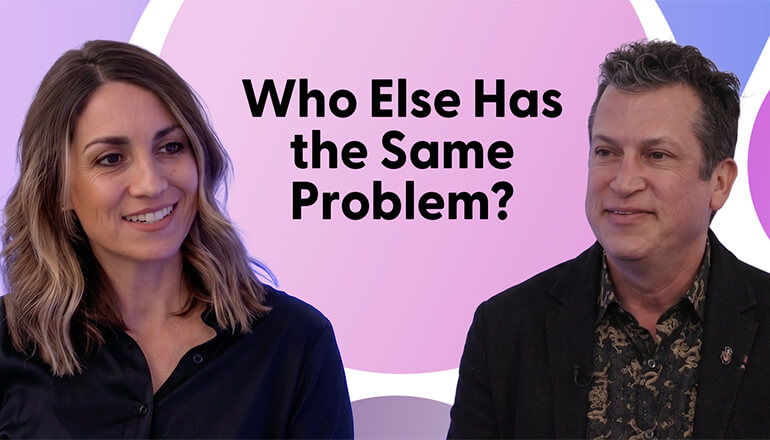
Migrating a petabyte of data to Google Cloud across 110 databases and three regions in three months — with zero customer impact — requires more than good intentions, it requires a strict planning discipline and a partnership built on deep technical understanding. Balaji Narayanan, VP of Engineering Infrastructure at Clari, breaks down the methodology his team used: testing each step in a replicated environment, running a pre-mortem to surface failures before the real cutover began, and working alongside a partner who understood their specific infrastructure well enough to execute with precision.
The conversation traces the full arc of a high-stakes migration — from the moment Balaji joined the project in October with no written plan in place, through the decision-making framework he uses to minimize irreversible "one-way door" steps, to the global staffing model that kept round-the-clock coverage running across India, South Africa, and the U.S. The first regional migration ran longer than its original estimate, but the team adapted their approach for subsequent regions and still delivered the full project on time.
Balaji applies a "type one vs. type two decision" framework to migration cutover planning — identifying which steps are reversible (two-way doors) and which are not (one-way doors), then working to minimize the irreversible ones. His pre-mortem process forces the team to anticipate failures and plan responses before the migration window opens, rather than reacting in real time.
A critical factor in the project's success was the partnership model. Balaji describes needing a partner who went beyond executing IT tasks — one who could learn Clari's specific tools and solutions, replicate their environment, and work alongside the internal team through validation and cutover. That deep understanding of the systems, combined with Google Cloud expertise, allowed the team to maintain quality and speed across a compressed timeline with global coverage. When asked whether he'd do the next migration alone, with a new partner, or with Insight, Balaji's answer was immediate — Insight only, because we understood the complexity and were with the team through the entire process.
The end state — a homogeneous Google Cloud infrastructure — eliminated the complexity of engineers working across multiple technology stacks. Standardized processes and repeatable runbooks replaced fragmented tooling, giving engineering teams a single system to master. For Clari, this consolidation was the foundation for supporting three acquisitions and a merger. IT leaders facing a major migration or cloud consolidation will walk away with a concrete planning framework, a cutover risk model, and a clear picture of what "good" looks like when the stakes are high.
For another example of infrastructure modernization delivered under a tight deadline, read how the AROYA cruise ship — the largest global cruise ship renovation to date — was modernized end-to-end across three onboard data centers in under 11 months.
If you liked this episode, share it with a colleague.
Have a topic you’d like us to discuss or question you want answered? Drop us a line at jillian.viner@insight.com

Balaji Narayanan
VP of Engineering Infrastructure, Clari
Audio transcript:
We’re in the process of finalizing the transcript. Please check back soon for the completed version.

Marketing Manager, Insight
As marketing manager for the Insight brand campaign, Jillian is a versatile content creator and brand champion at her core. Developing both the strategy and the messaging, Jillian leans on 10 years of marketing experience to build brand awareness and affinity, and to position Insight as a true thought leader in the industry.
VP, Engineering Infrastructure, Clari
Subscribe to our podcast today to get automatic notifications for new episodes. You can find Insight On on Amazon Music, Apple Podcasts, Spotify and YouTube.