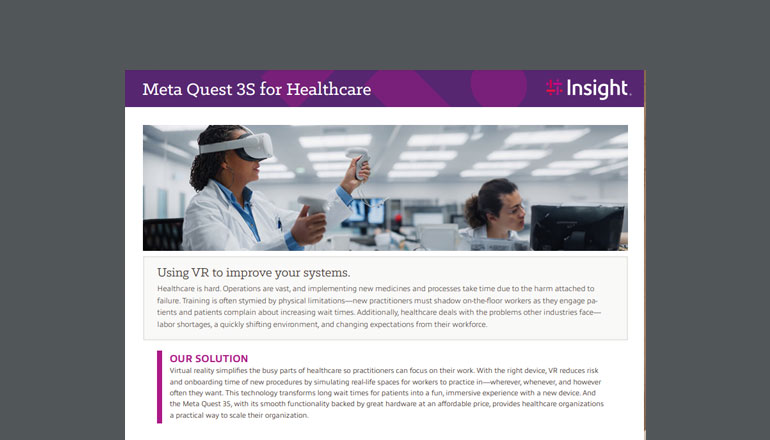
Infographic text for screen readers
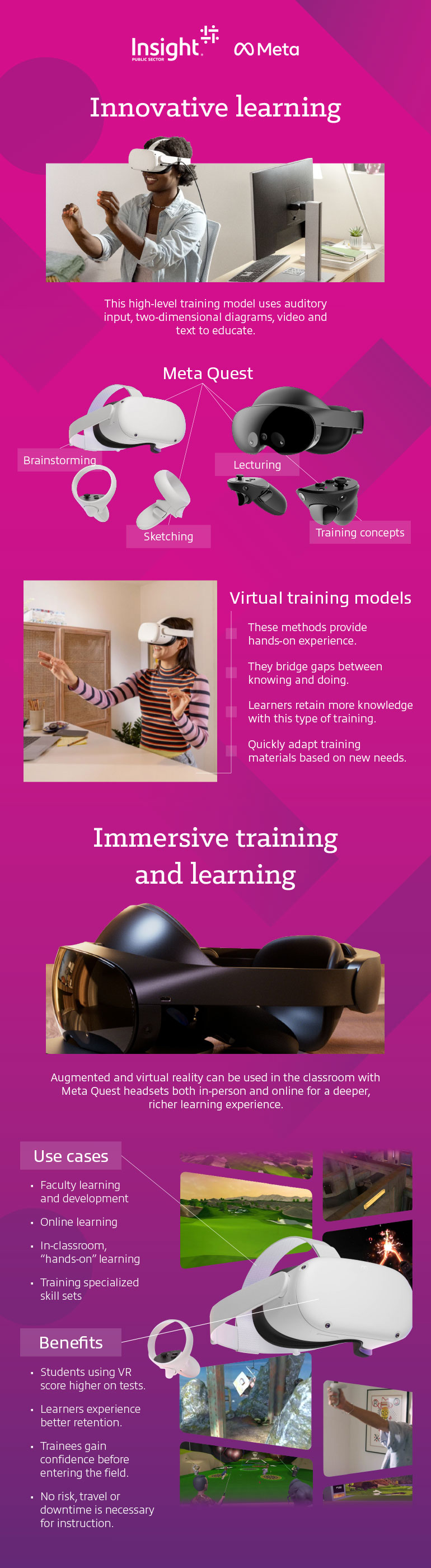
This high-level training model uses two-dimensional diagrams, video and text to educate.
Meta Quest
- Brainstorming
- Sketching
- Lecturing
- Training concepts
Virtual training models
- These methods provide no hands-on experience.
- They result in gaps between knowing and doing.
- Learners retain less knowledge with this type of training.
- Quickly adapt training materials based on new needs.
Immersive training and learning
Augmented and virtual reality can be used in the classroom with Meta Quest headsets both in-person and online for a deeper, richer learning experience.
Use cases
- Faculty learning and development
- Online learning
- In-classroom, “hands-on” learning
- Training specialized skill sets
Benefits
- Students using VR score higher on tests.
- Learners experience better retention.
- Trainees gain confidence before entering the field.
- No, risk, travel or downtime is necessary for instruction.