Infographic text for screen readers
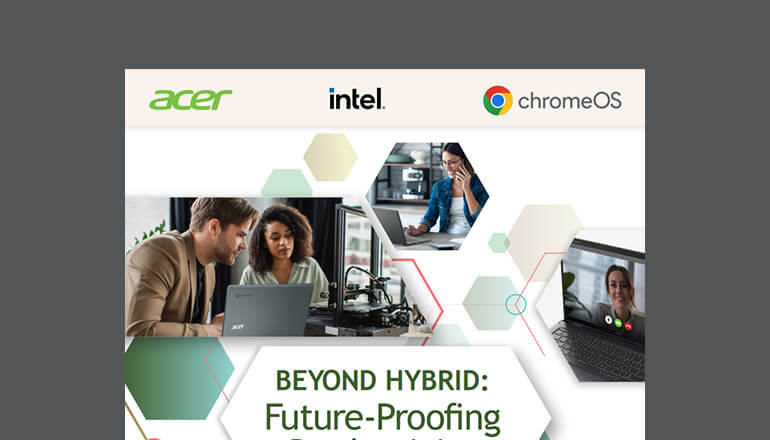
Acer devices combine the productivity, security and flexibility of Chrome Enterprise with industry-leading virtualization solutions to help today’s healthcare teams deliver best-in-class care.
1. Enable secure entry points.
Healthcare breaches are continuing to shake up the industry. In 2020:
- 29 million healthcare records were breached in total.
- One breach involved more than 10 million records.
- 63 healthcare facilities had more than 100,000 records breached.
Maintain compliance and give employees ready access to medical information to
improve safety, efficiency and patient confidence.
Security benefits of virtualized Acer Chrome devices:
- Leverage a centralized management point for infrastructure, data and security
- Get easy access to virtualized environments, apps and desktops.
- Multiple options support legacy systems while migrating to the cloud.
- Free clinicians from being tied to a single device.
- Layered security includes built-in proactive protection and the prevention of locally saved data.
- Get automatic background updates and remote wiping capabilities.
- Data encryption at every level supports peace of mind.
- Access control can be customized per user, per device.
2. Improve efficiency.
Mobilize healthcare teams.
Ensure practitioners across every healthcare setting have easy and secure access to the apps and patient information they need.
Digitize training.
From developing ongoing training documents to managing long-term tools, create custom apps to increase engagement via shared devices.
Reduce wait times.
When new shifts begin or new teammates are onboarded, ensure Chromebooks can be deployed and running in minutes. A 10-second boot time and friendly user interface makes this easy.
3. Enhance patient experiences.
In-room entertainment and information
Devices placed in care settings enable patients to:
- Request assistance.
- Browse the web.
- Monitor their health status.
- Stream content.
Self-service kiosks
Add Acer Chrome devices to entry and exit points to:
- Streamline the check-in and check-out process.
- Facilitate information collection.
- Reduce manual, administrative workloads.
Durable devices to be enjoyed by all
Built for the dynamic healthcare environment and designed to meet every patient need, Acer Chrome devices are:
- Lightweight but also made with military-grade durability
- Aesthetically pleasing with professional, sleek designs
- Robust enough to withstand falls from beds, desks or waiting room tables
- Intended to last between 10 to 14 hours on one charge
- Easy to use by all (children and adults alike) thanks to a user-friendly interface
4. Connect all points of care.
Flexible device options work well as shared workstations or devices for mobile workers.
Everyone can seamlessly connect to Electronic Health Records (EHRs) with single sign-on and Virtual Desktop Infrastructure (VDI) solutions.
Inclusive, Acer Chrome devices enhance visual clarity with a built-in:
- Screen magnifier and reader
- High-contrast mode
- Select-to-speak capability
- Braille support
- And more
5. Reduce your TCO.
Over a three-year period, Chromebooks have been found to help:
- Lower Total Cost of Ownership (TCO).
- Simplify operations.
- Reduce security risks.
- Decrease incidents of downtime.
- Prevent lost productivity.
In fact, deploying Chromebooks can provide annual savings of up to $482 per device, including acquisition and operational costs — and business uptime.
Since multiple workers can share one Chrome device (and access individual cloud profiles for more specific information thereafter), healthcare facilities could also find savings in investing in fewer devices.
Sources:
HIPAA Journal. (2020). Healthcare Data Breach Report: 25% Increase in Breaches in 2020.
HIPAA. (n.d.) The Use of Technology and HIPAA Compliance.